
When we begin luxury home construction in Dominical, the first step is always a comprehensive site evaluation. The unique topography, climate, and infrastructure of this coastal region create specific challenges that directly influence architectural design, engineering solutions, and overall project costs. Understanding these conditions from the outset is what separates a successful build from one plagued by delays, budget overruns, and structural issues.
As a luxury custom home builder, we’ve learned that no two properties are identical. Each site presents its own combination of opportunities and constraints that must be carefully analyzed before design begins. This technical groundwork allows us to create residences that are not only visually stunning, but also resilient, sustainable, and aligned with realistic expectations.
1. Steep Slopes and Terrain Complexity
Many desirable properties feature dramatic slopes that offer breathtaking ocean views. However, these steep lots introduce significant design and engineering considerations. The angle of the land affects foundation design, excavation depth, and the structural approach required to ensure long-term stability.
We carefully analyze grade changes to determine where the home should be positioned, how we’ll manage cut-and-fill operations, and whether the design should embrace multi-level construction. Sloped sites often require pier-and-beam or pillar foundation systems rather than traditional slab-on-grade construction, allowing the home to step with the land while reducing earthwork and preserving the natural landscape.
2. Access and Logistics Planning
Remote or hillside properties may lack paved roads or wide access routes, making it difficult to bring in heavy equipment, concrete trucks, or material deliveries. We assess access conditions during the initial site visit to determine whether temporary roads need to be built, whether smaller machinery is required, or if materials must be transported in stages.
These limitations directly impact material choices, labor costs, and the feasibility of certain design elements. Planning for logistics from the beginning helps us provide accurate budgets and avoid costly delays once construction begins.
3. Stormwater Management and Drainage Systems
The region experiences intense rainfall during certain months, and properties on slopes are particularly vulnerable to erosion, runoff, and water infiltration. Effective stormwater management is a structural necessity that protects the home, the landscape, and neighboring properties.
We design integrated drainage systems that redirect water away from foundations, prevent soil erosion, and manage runoff responsibly. This may include French drains, retention basins, permeable surfaces, or bioswales that blend into the landscape design. Failing to address drainage properly can lead to foundation movement, interior moisture issues, and long-term structural damage.
4. Retaining Walls and Soil Engineering
Retaining walls are often essential on sloped sites to create usable outdoor spaces, protect foundations, and prevent soil erosion. However, these structures must be engineered to withstand lateral soil pressure, groundwater movement, and seismic activity.
We collaborate with geotechnical engineers to evaluate soil composition, drainage needs, and structural requirements before designing retaining solutions. Proper engineering at this stage prevents costly failures and ensures the longevity of both the walls and the home itself.
5. Orientation for Views and Natural Ventilation
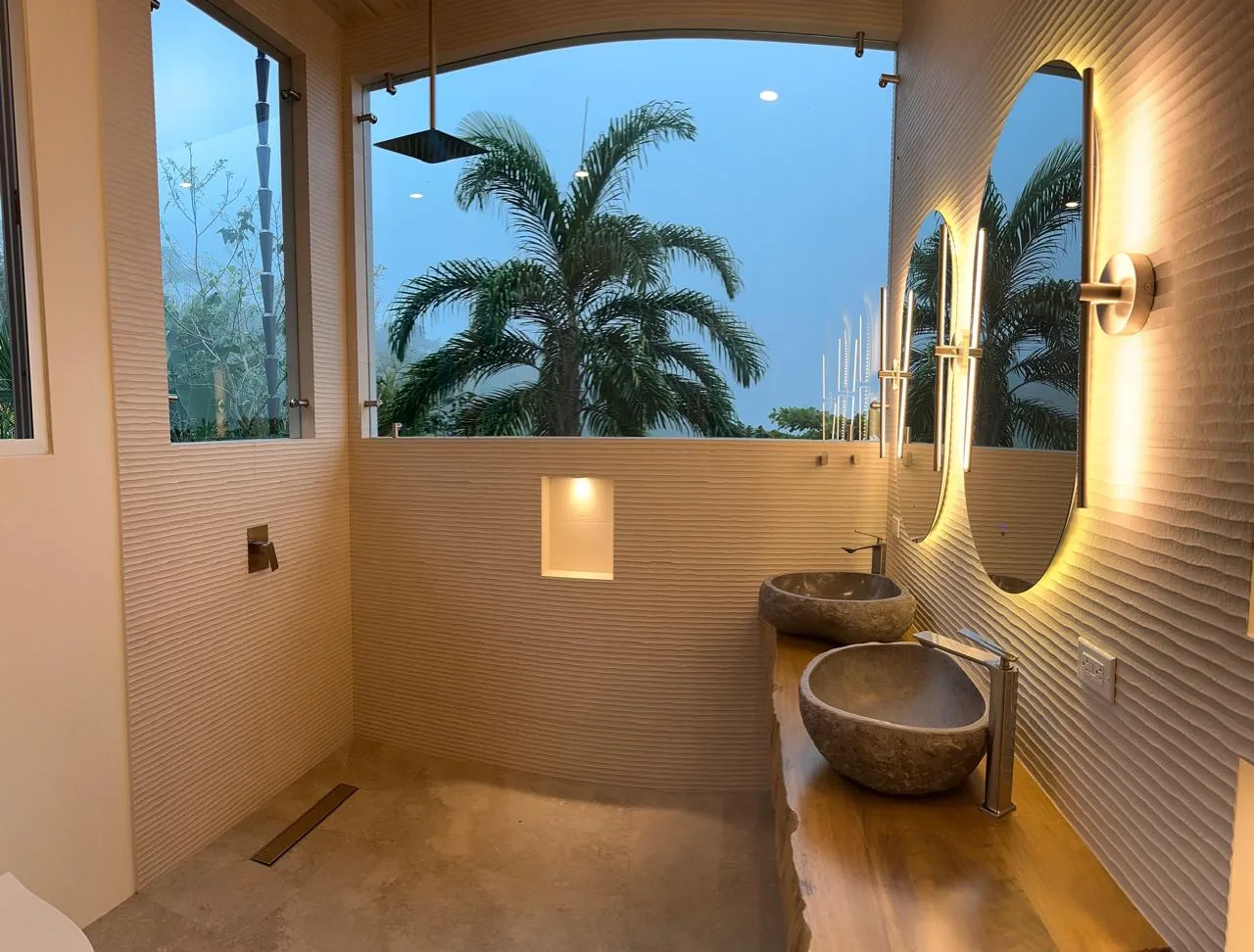
One of the greatest advantages of building in this area is the opportunity to capture stunning ocean and jungle views. However, orientation isn’t just about the view. It also affects natural light, cross-ventilation, solar heat gain, and exposure to prevailing winds.
We position each home to maximize visual connection with the surroundings while optimizing passive cooling and daylighting. This approach reduces energy consumption and creates comfortable living environments year-round.
6. Coastal Weather Exposure and Material Selection
Proximity to the ocean brings salt air, high humidity, UV exposure, and seasonal storms. These conditions demand careful material selection and detailing to ensure long-term durability and minimize maintenance.
We prioritize corrosion-resistant finishes, treated woods, high-performance glazing, and weatherproof sealants. Every material choice is evaluated not just for aesthetics, but for its ability to withstand the coastal environment over decades.
7. Engineering for Expansive Glass and Open Design
Clients naturally want to take full advantage of panoramic vistas, and we design with that goal in mind. However, large glass openings, cantilevered decks, and open floor plans must be carefully engineered to maintain structural integrity, especially on sloped or exposed sites.
We work closely with structural engineers to ensure that expansive windows, sliding wall systems, and outdoor living areas are both safe and sustainable. This collaboration allows us to deliver the open, light-filled spaces our clients desire without compromising performance.
Questions to Ask Before You Build
Before purchasing a lot or selecting a construction partner, we recommend asking the following questions to protect your investment and set realistic expectations:
- Has a geotechnical study been conducted to assess soil stability and drainage?
- What access limitations exist, and how will they affect construction logistics?
- Is the site located in a flood zone or area prone to erosion?
- What are the setback and building coverage regulations for this property?
- How will the home be oriented to optimize views, light, and natural ventilation?
- What materials and systems are recommended for coastal weather exposure?
You can explore our completed projects on our residences page and learn more about how we approach each build on our process page. Build the luxury home you have always imagined in Costa Rica. Contact us and let’s talk about your project.